



Soluble Oil vs Synthetic Coolant: A Machining Trial That Can Decide
Select a water-miscible cutting-fluid family for a defined operation. Compare supplier grades under controlled conditions before specifying a replacement.
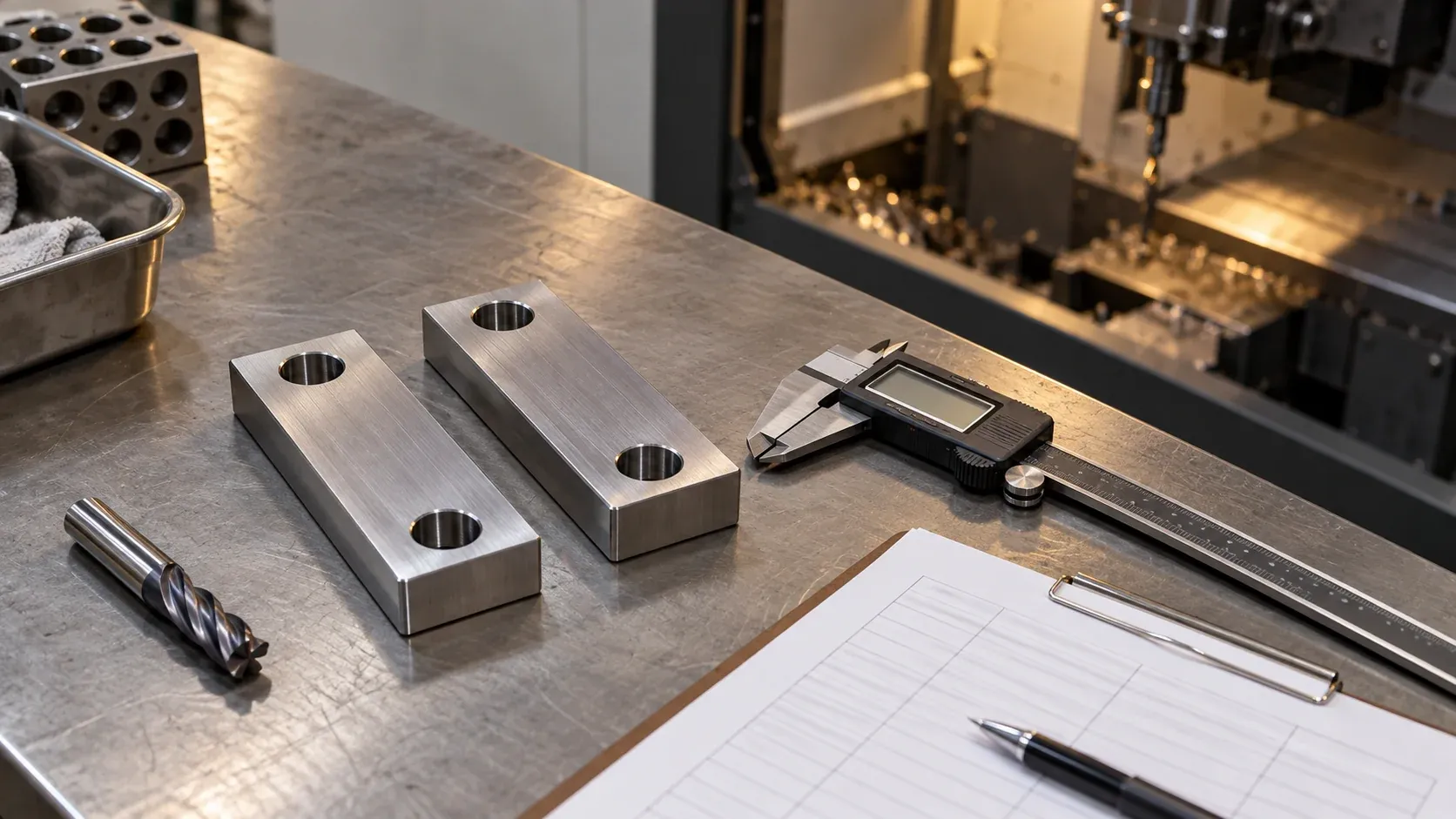
A coolant-family change is a purchasing decision about a particular machine, workpiece and fluid system—not a contest between a milky sample and a clear one. MOS lists both an emulsifiable metalworking coolant and a separate water-soluble synthetic cutting fluid. Their catalogue identities make them candidates for comparison; they do not establish that either grade will cut better, last longer in a sump or suit every metal. Shortlist the actual offered grades first, then run a trial that can separate fluid choice from the conditions around it.
First identify the fluid family—and the specific supplied grade
“Soluble oil” normally means an oil-containing concentrate dispersed in water; “synthetic” names a different water-miscible formulation family rather than a higher quality tier. OSHA distinguishes soluble oil, semisynthetic and synthetic metalworking fluids. These broad classes explain what must be checked, not how an individual MOS grade will perform. The MOS emulsifiable page lists several grades, while the synthetic page lists L-MAG and L-MAH. The imported emulsifiable specification rows do not reliably map every value to a particular grade, so do not copy a single corrosion, foaming or concentration number into a comparison table without the current grade-specific TDS and test method.
Neither “water soluble” nor “synthetic” means ready to pour into a machine neat. Obtain each candidate’s instructed dilution, addition sequence, water-quality envelope, SDS and machine-material compatibility before preparing a working fluid. Do not assume a synthetic concentrate can be added directly to an operating soluble-oil sump; the old fluid, tramp oil and cleaning residue would make the result uninterpretable.
Define what the machine needs before comparing samples
The workpiece alloy, cutting operation, tool, speed and fluid delivery determine what must be evaluated. FUCHS’s cutting-fluid guidance places the machined material and machine type ahead of a generic product label. For a purchasing trial, write down the current failure or improvement target: finish, tool wear, chip removal, deposits, foam, corrosion, visibility or fluid-management effort. A fluid that looks cleaner in a beaker has not yet passed a machining requirement.
Use this brief matrix to decide what evidence belongs in the trial. It is a test plan, not a ranking of MOS products.
| Buyer decision | Hold constant or record | Evidence needed before choosing |
|---|---|---|
| Cutting duty | Same alloy, operation, tool, machine and delivery arrangement | Finish, tool condition and process observations under an agreed run |
| Dilution and water | Each grade at its own supplier-approved working concentration; record water source and analysis | Stability, foam and corrosion checks using the actual plant water |
| System management | Identify old fluid, cleaning, top-ups, tramp oil and filtration | Fresh-charge and in-service observations kept separate |
| Acceptance and cost | Define the acceptance window and total working-fluid basis | Repeatable result and agreed replenishment/maintenance record; not concentrate price alone |
The grades may have different recommended use concentrations. Therefore, equal litres of concentrate are not an equal-use comparison. Compare each candidate at its own confirmed operating point and disclose that difference in the cost calculation.
Run a controlled switch trial, not an informal top-up
Start with an agreed reference process and representative parts. Confirm the machine’s permitted coolant family and the supplier’s cleaning and changeover instructions. Keep material, cutting parameters, tooling, operator record and inspection method as stable as practical. Make a fresh charge of each candidate with the same documented plant-water source, while following that grade’s own dilution instructions. Label the samples and preserve the as-mixed data before the machining run.
Record concentration by a method calibrated or approved for that specific formulation; an uncorrected refractometer reading is not automatically the actual concentration. Track incoming water separately from the working sump. Document appearance, foam, deposits, corrosion and any agreed finish or tool-condition endpoint at planned intervals, then compare those observations with the baseline. If a result changes after days in service, check concentration drift, top-ups, contamination and maintenance before crediting or blaming the fluid family. The existing metalworking-fluid water-quality guide explains why incoming water and an aged sump are different samples; it does not decide this family-selection trial for you.
Do not deliberately mix the two concentrates to “see which wins.” Cross-contamination can obscure the result and may affect safety or compatibility. A small fresh dilution can screen handling and water compatibility, but it cannot prove tool life, long-term sump stability, skin tolerance or plant-wide economics. Review workplace controls and the current SDS for either fluid family.
Interpret the outcome before requesting a quotation
If one candidate meets the agreed machining and maintenance endpoints while the other does not, confirm that the difference repeats under comparable conditions before changing the specification. If both pass, compare working-fluid consumption, maintenance and disposal obligations on the same accounting basis. If both fail, revisit the machine, material, water and process conditions; a family label alone does not diagnose the cause. Keep safety and local waste-handling requirements in the decision; OSHA treats fluid selection, dispensing and maintenance as parts of the same water-miscible-fluid program.
For a grade-specific MOS enquiry, send the workpiece and operation, machine and fluid delivery, current fluid and changeover plan, water analysis and sampling date, target endpoints, trial quantity, expected order size, packaging and destination. Ask for the exact offered grade’s current TDS/SDS, recommended dilution and water envelope, test methods, sample size and acceptance procedure. The emulsifiable coolant product page is the primary route for that option; the synthetic cutting-fluid page identifies the alternative family. The RFQ can then refer to a real, repeatable decision rather than a presumed universal winner.
Sources: OSHA Metalworking Fluids Safety and Health Best Practices Manual; FUCHS Cutting Fluids guidance. General source principles do not certify a MOS grade.