



PMA Viscosity Modifiers: Shear Stability, Treat Rate and Finished-Oil Viscosity
Compare PMA viscosity modifiers by treat rate, ASTM D7109 test cycles, retained viscosity after shear and low-temperature performance in the finished oil.
On this page
Compare polymers at the same finished viscosity target
PMA (polymethacrylate) identifies a polymer family. A candidate's thickening effect, low-temperature behavior and viscosity retention depend on the specific grade and the complete formulation. Compare candidates in the same base-oil and additive system. Adjust each treat rate to the agreed initial viscosity and distinguish concentrate dosage from polymer solids.
How to calculate the treat rate for PMA viscosity modifiers
For a polymer solution, first compare the supplied-product mass fraction needed to reach the same finished-oil viscosity window. If the supplier discloses the active polymer fraction, calculate active polymer by multiplying the two fractions. As a calculation example, adding 4.0% of a product containing 30% active polymer puts 1.2% polymer into the finished oil. Set any actual dose through a blend trial.
In the cost sheet, multiply the dose per tonne of finished oil by the delivered price per unit of product. Keep the minimum order, blending constraints and carrier-oil information next to the cost. A lower additive price can produce a higher formulation cost when the dose required for the same viscosity and shear performance is higher.
Ask for the shear method, cycles and retained viscosity
ASTM D7109 evaluates viscosity loss at 100 °C using 30 and 90 injector cycles. ASTM D6278 uses a 30-cycle procedure. Keep the method, cycle count, initial viscosity and final viscosity together. Report the loss as well as the retained viscosity because an acceptable percentage loss can still leave the finished oil below its required limit. If a proposal lists a shear stability index, confirm how it was calculated before comparing it with a finished-blend percentage loss.
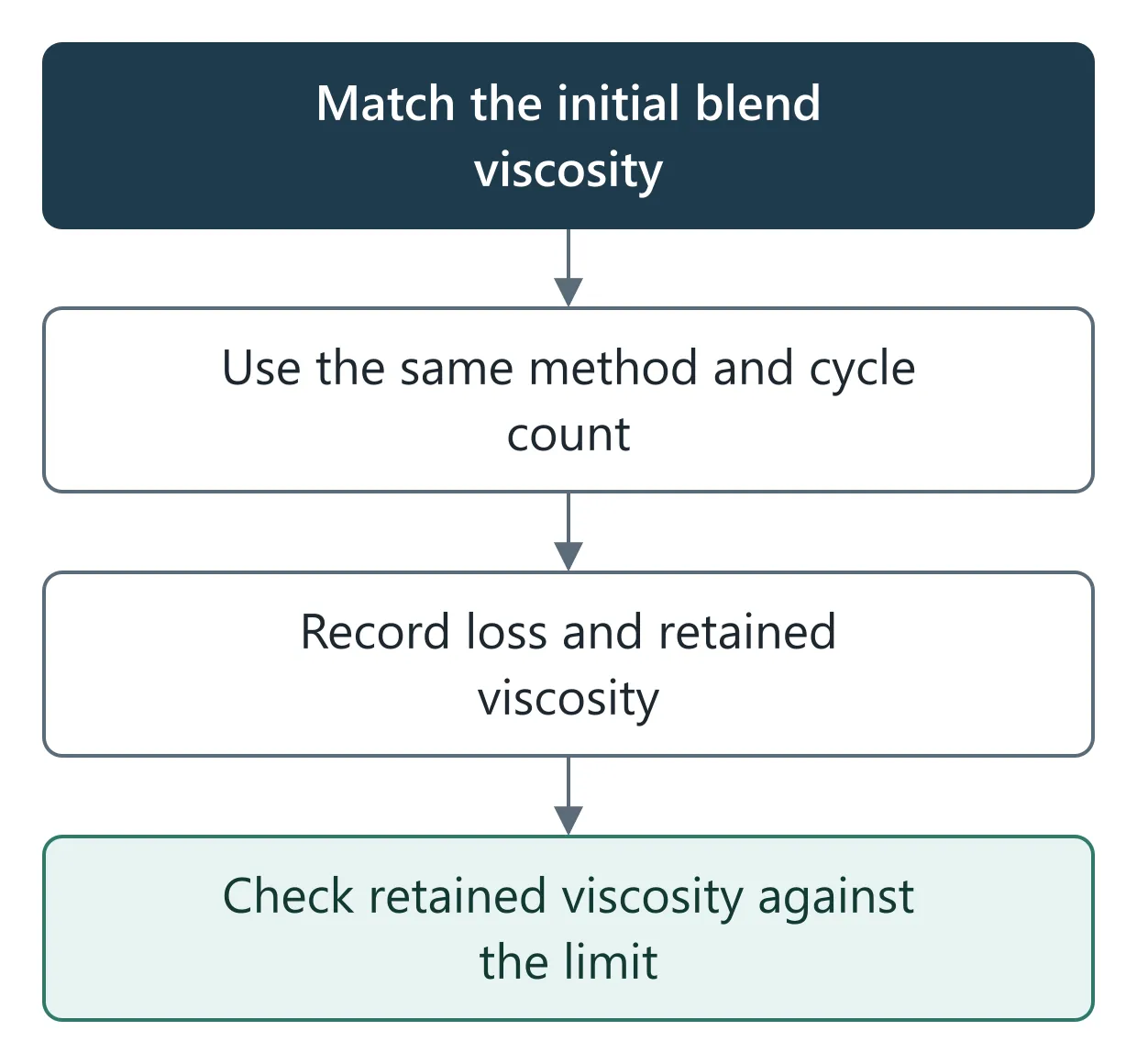
| Record | What to enter |
|---|---|
| Blend and dose | Base stock grade, package, modifier lot and mass fraction as supplied. Record active polymer separately when known. |
| Before and after | Kinematic viscosity at the test temperature, method and cycles. Include the initial and retained values. |
| Acceptance | Allowable loss and minimum retained viscosity for the target finished oil. Record pass/fail for the actual blend. |
Choosing between ASTM D7109 and other shear tests
Use the method required by the finished-oil specification. D7109 reports kinematic viscosity loss after specified cycles. Where a hydraulic fluid specification calls for ASTM D5621, use its sonic shear result. Retain the method, cycles or relevant conditions and the initial and final viscosities. Compare each result with the limit for its own method.
For example, suppose an internal trial requires at least 10.0 mm²/s at 100 °C after shearing and the two hypothetical samples start at 12.0 mm²/s. If they finish at 9.8 and 10.4 mm²/s respectively, only the second passes that viscosity check. Record the other requirements, including low-temperature performance, before releasing either formula.
Retest the properties that can move after a formula change
Measure the initial and post-shear viscosity of the target oil. For a cold-weather hydraulic or engine oil, add the relevant low-temperature viscosity test and any other checks required by the finished specification. A viscosity modifier that improves viscosity index can still require a separate pour-point evaluation and a different low-temperature additive strategy. Repeat the blend when the base stock or performance package changes.
Cold performance, formulation changes and the first batch
Include the applicable cold-viscosity or pumpability result in the trial record. Some PMA-containing blends also need a pour-point or depressant evaluation. Record mixing sequence, temperature and material lots, with processing conditions confirmed through supplier guidance and the plant procedure.
On the first delivery, check the grade and lot paperwork against the version qualified by the trial. Check whether the base-oil source, polymer concentration or additive package changed before charging a new lot. Give priority to retesting measurements that were closest to their specification limits.
Request evidence in the same form from all bidders
Ask for the grade, carrier information, active polymer content where disclosed, suggested treat-rate range for the intended base stock, TDS, SDS and pilot sample. Attach a worksheet with the blend target, dosage basis, test method and pass criteria. Compare cost after each candidate reaches the finished requirements and record any extra handling or blending steps.
Product selection and inquiries
Send the base oil, target viscosity grade and shear test method with cycle count. Include the minimum retained viscosity and low-temperature limits if specified.