



HM/HV Hydraulic Oil Additive Packages: ISO 13357 Filterability and Release Tests
Select HM/HV hydraulic oil additive packages using ISO 11158, ISO VG, ISO 13357 dry and wet filterability, and finished-blend release tests.
On this page
Define HM or HV and the required ISO VG
ISO 11158 sets requirements for finished mineral hydraulic oils. HM is the antiwear category. HV adds improved viscosity–temperature behavior to the HM performance profile. ISO VG describes the viscosity class. Define both the category and grade, then record the equipment requirements and operating-temperature range. A higher viscosity index is one input to an HV formulation and the remaining performance criteria still apply.
Match HM/HV hydraulic oil additive packages to the pump and filter
Use three groups of requirements in the RFQ. The first identifies the finished-oil category and ISO VG. The second describes the pump, operating temperatures and start-up conditions, with filter details and bypass or alarm settings where the customer provides them. The third specifies the test methods, limits and frequency. Viscosity-temperature and cold-start needs can differ between systems using the same ISO VG, particularly in outdoor service.
If condensation or cooler leakage is credible for a specific system, agree on a wet filterability check. Where a proposed fluid can be evaluated in service, log field filter differential pressure and the laboratory results separately so maintenance history can be interpreted with the test evidence.
Keep water separability and filterability separate
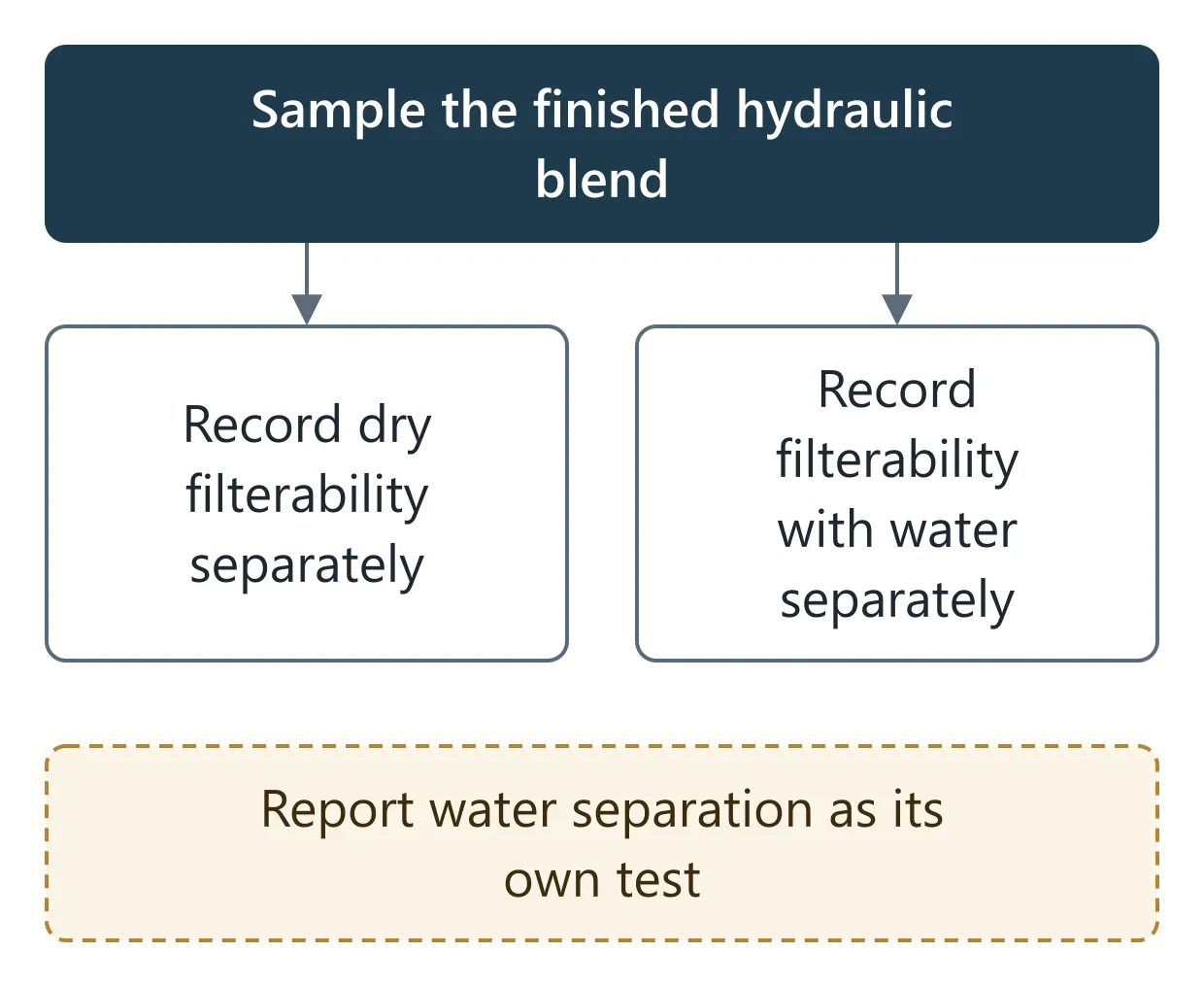
Check water separability under a method such as ASTM D1401 where required. For mineral-based formulations within the scope of ISO 13357, compare wet filterability (Part 1) and dry filterability (Part 2) independently. Additive chemistry, the selected base stock and water contamination can affect results. A fluid that separates from water in one test still needs its own filtration evidence when required.
| Question | Evidence to request |
|---|---|
| Which finished specification is targeted? | HM or HV, ISO VG, applicable OEM requirements and finished-blend test plan. |
| How does the blend separate from water? | A reported water-separability test with method, temperature and time. |
| Does it pass the agreed filtration test? | Separate ISO 13357 wet and dry records as applicable, with test conditions and results. |
How to read ISO 13357 dry and wet filterability reports
ISO 13357-2 covers dry oils, while ISO 13357-1 covers oils in the presence of water, within the scope of the respective methods. Check the sample identity, edition and conditions used before comparing reports. ASTM D1401 covers the separation of oil and water. Use separate filterability results when they are part of the acceptance specification, especially after a formulation change.
If a trial is satisfactory dry and deteriorates in the wet test, retain the reference and candidate samples and review test conditions. Then isolate a formulation variable using the same base-stock lot before attributing the result to zinc content, viscosity or the package. Share the observed results and formulation context with the supplier's technical team.
Qualify the blend at the proposed treat rate
Ask which base stock, grade, dose and supporting additives were used in the reference results. Set up a control and a candidate blend at the intended composition, record masses and sample IDs and agree with the lab on the acceptance limits. A low-zinc option or a different viscosity modifier warrants its own test on the actual blend. Include the required wear protection, oxidation stability, foam and low-temperature checks in the final qualification plan.
Carry the lab decision into first-batch acceptance
Identify and retain the reference oil, trial blend and first production batch separately. The reference helps identify a test shift, the trial verifies the change, and the plant sample confirms that the important acceptance results survived scale-up. Update the test matrix if the finished category or viscosity grade changes.
Specify the supplied-package dose by mass of finished oil and document its recommended base stocks and any separate viscosity modifier or pour point depressant. Compare the cost at a validated dose and include any additional qualification work when assessing a new package.
Turn the trial into a purchasing specification
Ask for the additive TDS and SDS, lot documentation, handling instructions and the recommended treat-rate range for the target base oil. Agree on how material or dose changes will be approved before a purchase order. Keep additive package documentation and finished-oil test or approval records in separate fields.
Product selection and inquiries
Send your base stock and grade, target HM or HV specification, ISO VG, pump type and filtration criteria. That gives the technical and purchasing teams a basis to discuss a candidate package and sample.