



Heat Transfer Oil Temperature Ratings: Bulk, Film and Flash Point
Distinguish bulk, film and flash-point evidence when qualifying heat transfer oil. Keep method, fluid revision and heater conditions attached to the decision.
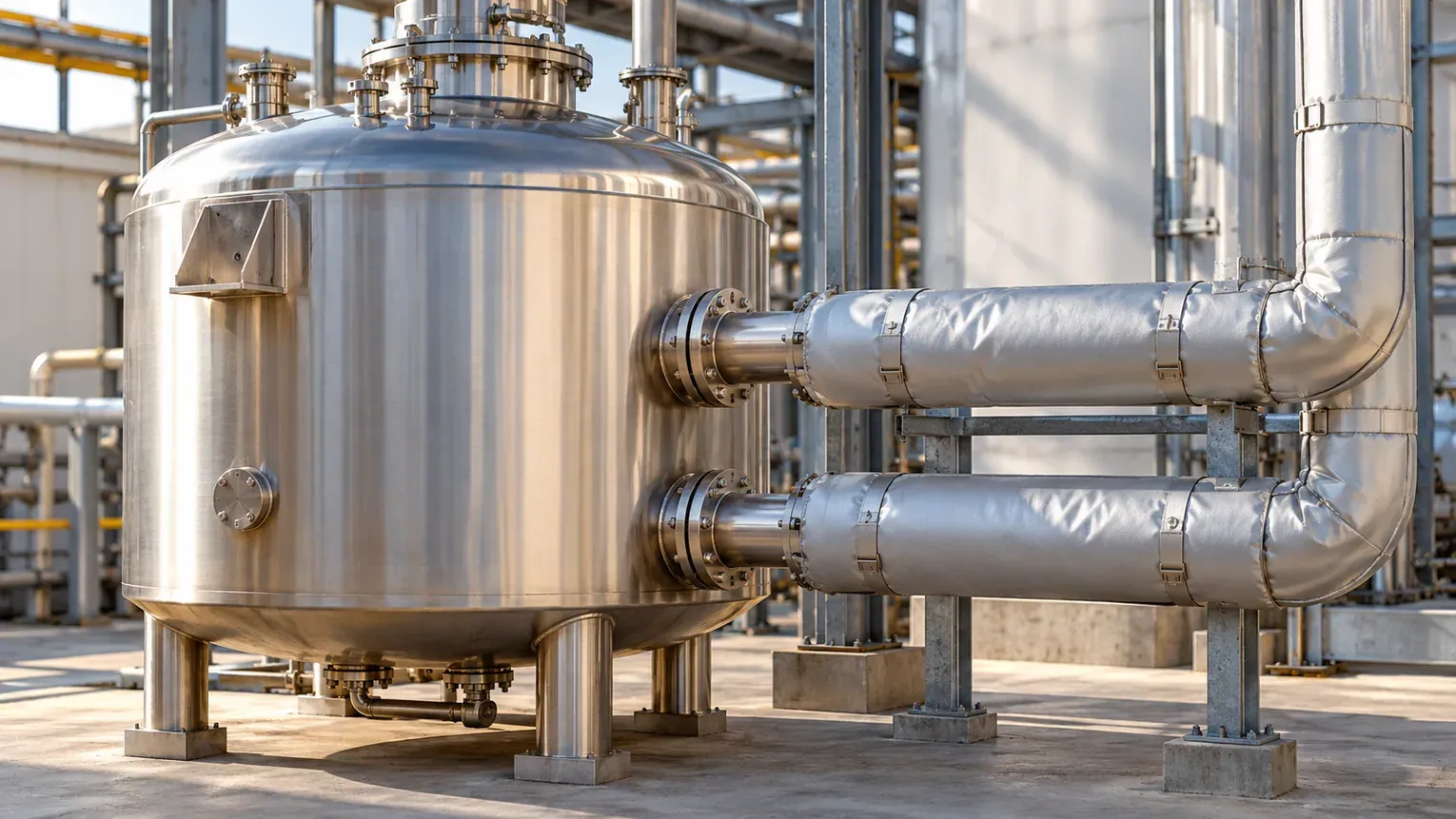
A heat-transfer-fluid offer can contain several temperatures without giving you a qualified operating envelope. Bulk temperature describes the fluid at a specified system location. Film temperature concerns the fluid next to the heated surface. Flash point is a laboratory ignition-test result. Putting these numbers in order does not establish which fluid is suitable for the proposed heater.
Start by identifying what each number represents and which evidence supports it. The purchasing objective is a fluid and equipment combination that meets the actual duty, not the highest temperature printed on a quotation.
Start with the fluid location, not the largest temperature
Bulk temperature is the temperature of the main body of fluid at a defined point, often the heater outlet. Record the measurement location and the operating condition it represents. An outlet reading, a process-vessel setpoint and a temperature elsewhere in the circuit are not automatically the same qualification condition.

The film is the layer of fluid adjacent to the heating surface. It can be hotter than the moving bulk. Eastman's thermal-fluid guidance distinguishes these locations and connects film conditions with the heater's heat input and fluid-side heat transfer. A bulk sensor therefore does not, by itself, establish the maximum film temperature.
The conceptual section separates the wall, near-wall fluid and bulk; it is not a measured temperature profile or a drawing of a supplied heater. The actual film assessment belongs to the responsible heater and fluid engineers. It needs the applicable heat loading, flow and fluid-property basis. Do not substitute a universal temperature addition for that assessment, or treat a metal-wall sensor as a direct measurement of every relevant fluid condition.
Read flash point as a test result
Flash point concerns whether sufficient vapor is present to ignite under a specified test procedure. It is not a test of thermal service life. The same technical reference distinguishes open-cup and closed-cup determinations. Keep the reported method attached to the result when comparing offers; do not convert between methods by subtracting an assumed constant.
A high flash point alone does not establish acceptable fluid degradation at the intended duty. Nor does a difference between flash point and operating temperature provide a complete fire-risk assessment. There is no generally valid rule of “flash point minus a margin” that qualifies the installation. This distinction is not permission to operate above a flash point: the actual fluid, equipment instructions and site safety assessment remain controlling.
Keep fire point, autoignition temperature and boiling behavior separate as well. They answer other physical questions. A quotation should not silently use one of those values to replace the missing bulk or film recommendation.
Qualify bulk and film as two separate limits
Ask for the exact fluid's current, condition-qualified bulk and film recommendations. Compare each with the corresponding requirement of the proposed installation. A statement that the bulk condition is acceptable leaves the film question unresolved if no applicable film assessment is available. Equally, an acceptable film assessment does not resolve cold-start circulation, contamination or other application requirements.
| Quantity | Evidence to retain | A conclusion it cannot support |
|---|---|---|
| Bulk fluid temperature | Defined location, representative duty and the exact fluid's applicable recommendation | Every fluid layer or every point in the circuit has the same temperature |
| Film temperature | Heater assessment with the relevant heat loading, flow and fluid-property basis; the fluid's applicable film recommendation | A fixed offset from one bulk reading qualifies every heater and load |
| Flash point | Sample identity, reported value and the named open-cup or closed-cup procedure | Thermal life, a universal service limit or complete installation fire safety |
Use a qualification record with separate entries for cold start, normal duty and the maximum intended duty. State what has been measured, what has been calculated or supplied by the responsible engineer, and which conditions remain unknown. A proposed maximum should not be described as a measurement.
Make the quotation refer to one fluid revision
The NEVASTANE HTF offering is an existing commercial route for an enquiry. Its current supplied grade and documents must still be matched to the application. Catalogue references and brochures from different revisions should not be combined into a new operating envelope. This guide adopts no numerical service limit, current certification or open-system approval for that product.
Send the fluid identity and current documentation together with the heater type, representative temperature duty, intended circulation and the available film assessment. Identify the missing decision explicitly: for example, whether the quoted recommendation applies to the stated heater and duty. Have the responsible supplier and equipment personnel resolve it against the same document revision.
Then include sample or order quantity, packaging and destination. If a particular food-processing registration or market requirement matters, request current evidence for the exact supplied product rather than inferring it from a general label. A useful quotation connects the grade to a documented application; it does not merely repeat three impressive temperatures.