



Group III Base Oils 4, 6 and 8 cSt: Grade Selection and Blend Validation
When comparing Group III base oils 4, 6 and 8 cSt, set a raw-material acceptance plan and a separate finished-oil trial plan. Record the actual source, grade and lot before comparing viscosities. A sourcing decision can then be traced from the supplier's figures through the blend trial to the finished-oil requirements.

On this page
What 4, 6 and 8 cSt tell you
These designations conventionally describe the approximate kinematic viscosity at 100 °C, measured in mm²/s (1 cSt = 1 mm²/s). Use the exact product specification and its test temperature to compare offers. The API base stock group is a separate classification based on saturates, sulfur and viscosity index. The cut name alone does not define a finished SAE grade or an ISO VG grade.
Which data make Group III base oils 4, 6 and 8 cSt comparable?
Use separate columns for kinematic viscosity at 40 °C and 100 °C, viscosity index, guaranteed limits and the actual results for the offered lot. Two offers labelled 6 cSt can contain very different evidence. If one has a TDS with typical figures and the other has contractual limits and a lot COA, request the missing information before grading the offers on the same basis. Keep the method and edition beside the value and tie a retained sample to the represented lot.
Where Noack volatility is a finished-engine-oil limit, specify whether the figures sought are for screening the base stock or for testing the finished oil. Use base-stock results to shortlist samples. Compare the final trial blends under the same applicable method and procedure, then review volatility together with low-temperature and high-temperature viscosity results.
Build the comparison around the finished oil
Start with the target finished-oil viscosity grade and the required low-temperature, volatility and performance limits. Compare the candidate's kinematic viscosity at 40 °C and 100 °C, viscosity index and the relevant volatility method. Include the proposed additive package and polymer in the trial. A base stock estimate is useful for screening and the finished oil test closes the decision.
| Nominal cut | First comparison in the lab |
|---|---|
| 4 cSt | Evaluate as a light component. Check low-temperature viscosity and volatility in the target blend. |
| 6 cSt | Evaluate as an intermediate component. Adjust the blend to match the target and compare the final viscosity and volatility. |
| 8 cSt | Evaluate as a heavier component. Check the amount needed to reach the viscosity target and retain the required cold-flow margin. |
Use a matching control blend and document any adjustments
Suppose an incumbent blend uses 4 cSt and 6 cSt stocks and the plant wants a second source for its 6 cSt stock. Keep the 4 cSt stock, additive package and viscosity modifier fixed for the first small trial. Blend the incumbent and candidate 6 cSt stocks at the same mass fraction and record both lots, the mixing sequence and the measured finished viscosity. If tuning is required, make a separate trial with an identified formula revision and document the new base-oil ratio.
Define follow-up tests from the intended finished-oil specification. For engine oils, the plan can include low-temperature cranking or pumpability, volatility and high-temperature high-shear viscosity where applicable. For an industrial lubricant, select tests against the equipment and buyer's specification. List each method, limit and result in the same sheet so the blender can see where a retest is needed.
Ask for limits, a lot sample and a trial record
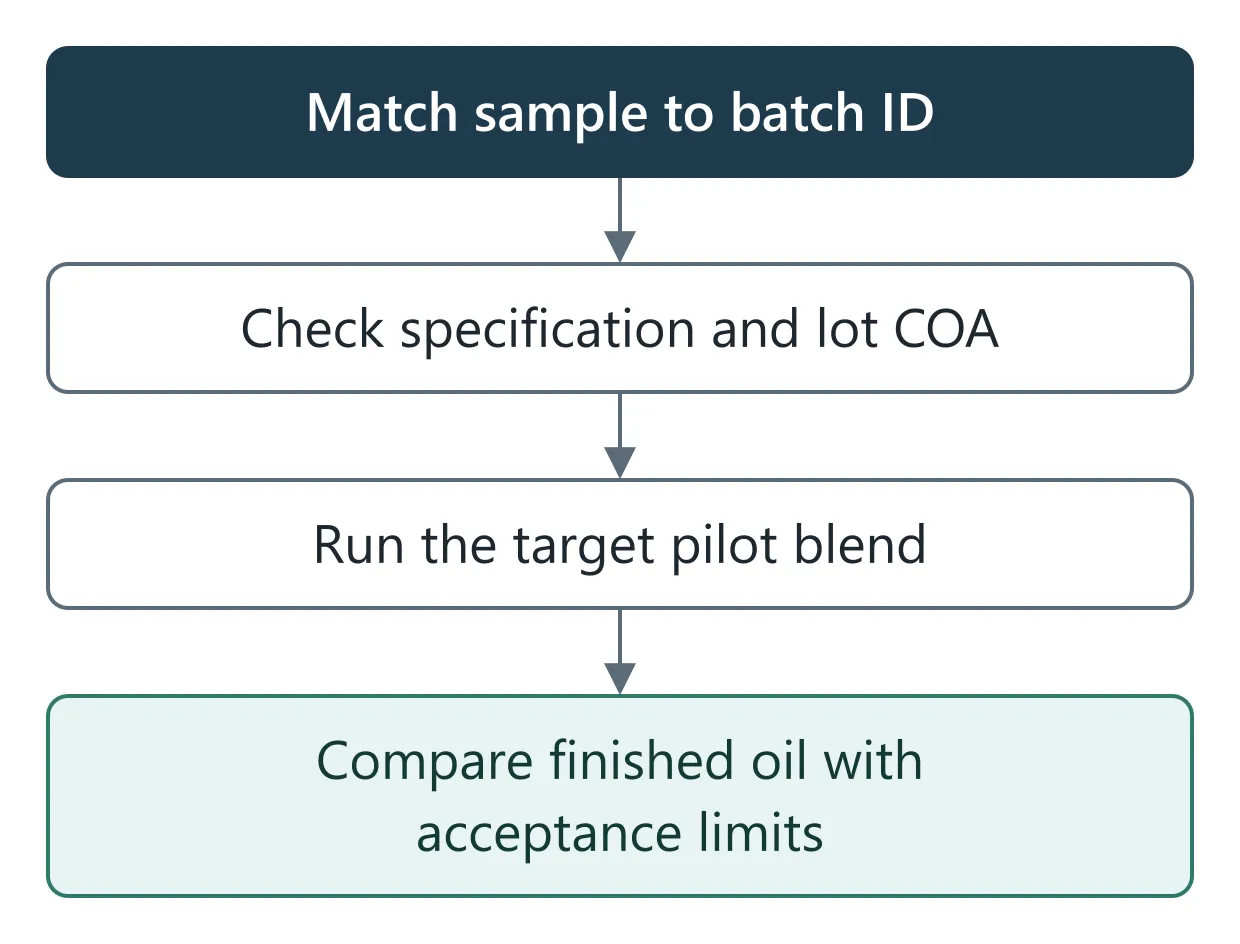
Request the product specification, current TDS and SDS, a representative COA and the COA for the sample lot. Record the exact grade, batch ID, guaranteed limits and test methods in the purchase file. After a pilot blend, record low-temperature viscosity and volatility where required and compare those results with the approved formula before ordering a different cut or source.
What should a second-source release file contain?
Prepare the incoming raw-material specification and lot COA, the finished-oil trial file and the applicable customer, OEM or API change review. Link the three records to the same base-stock source, grade and formulation revision. Where API base oil interchange rules apply, find the table and conditions for the finished-oil category and agree on any additional tests before setting a plant changeover batch. Commercial evaluation can run alongside the technical work.
Check whether a change triggers qualification
An equivalent nominal viscosity is an input to the change review. When a licensed engine oil is involved, check the applicable API 1509 base oil interchange route for the formula and category and document any additional tests. Follow customer and OEM change-control requirements separately.
Product selection and inquiries
Send the target finished grade, base stock viscosity range, documents required and sample quantity through the contact page. MOSLUBE can use those details to discuss candidate grades and batch documents.