



Turbine Oil vs Hydraulic Oil: Match the Circuit Before the Grade
Separate circuit duty, viscosity, offered-grade qualification and residual-mixture compatibility before replacing or topping up industrial oil.
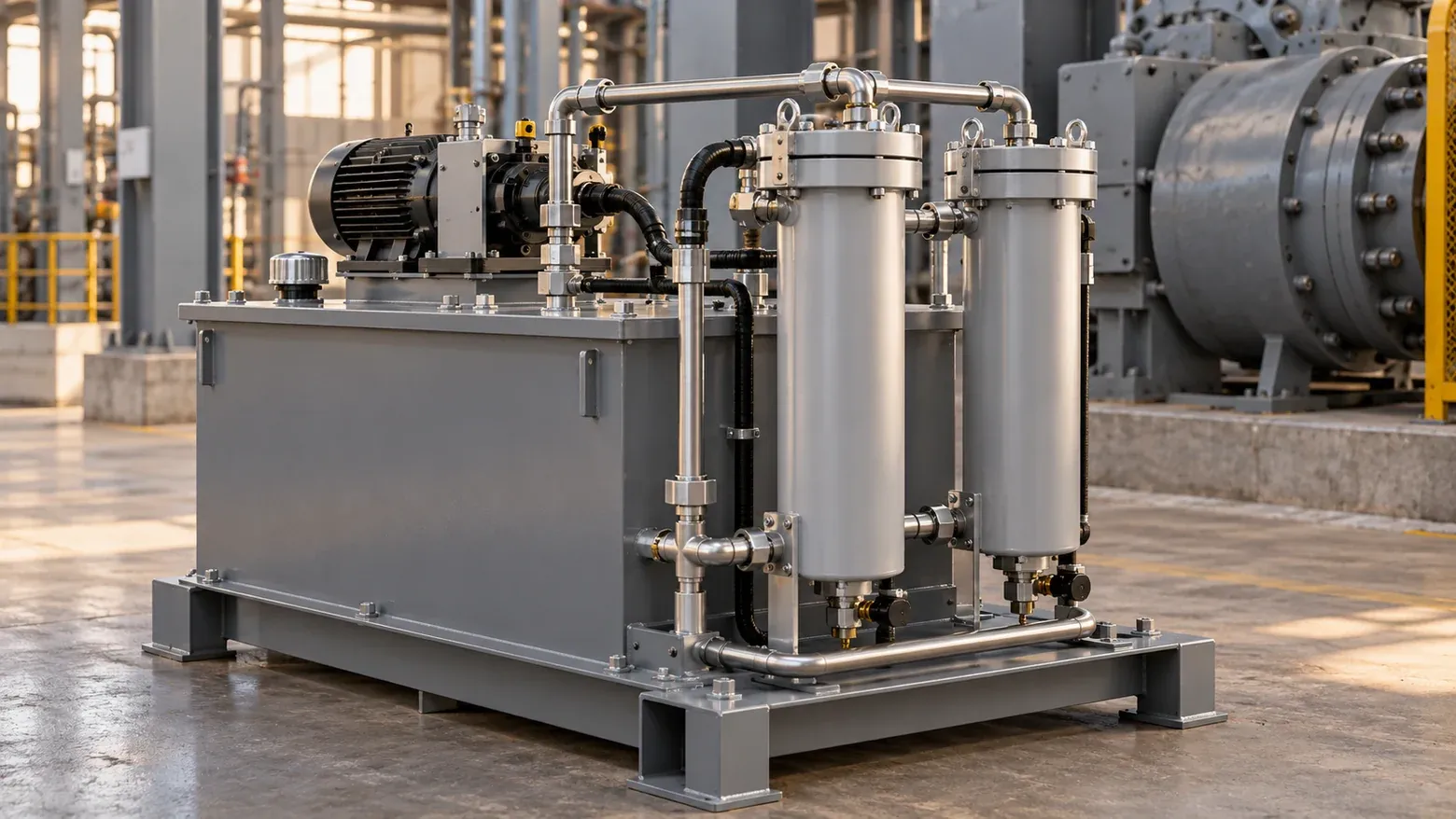
An ISO VG 46 label is not permission to replace a turbine oil with a hydraulic oil. It identifies a viscosity class; it does not identify the complete performance requirement, an equipment approval or the behaviour of a mixture with the oil already in service. Start by finding the reservoir and the functions it supplies. That often changes the comparison more than the name on the drum.
For procurement, separate three questions: Is the proposed viscosity appropriate? Does the exact offered grade meet the equipment's fluid requirement? Can the planned changeover or residual mixture be accepted? A positive answer to one does not answer the other two.
Locate the circuit before comparing the drums
Follow the equipment documentation from the oil reservoir to its users. A dedicated bearing-lubrication circuit, a hydraulic power unit and a reservoir serving both lubrication and hydraulic controls are different qualification problems. The word “turbine” on the equipment nameplate does not identify every fluid used around it.
MOS lists L-TSA R&O for steam-turbine bearing, seal and circulation duties, while its L-HM range is described for medium- and high-pressure hydraulic systems with antiwear requirements. These descriptions establish where to begin checking a grade. They do not establish that either range can replace the other in a particular installation.
Record the reservoir identity, equipment model, incumbent oil's full product name and the governing fluid document. If the reservoir serves more than one function, keep those requirements together. If the circuit cannot be identified, hold the substitution decision rather than selecting from a family name.
Read the performance requirement separately from ISO VG
Once the circuit is known, compare the required performance categories and test conditions for the exact offered grade. “R&O” describes rust-and-oxidation protection; it is not a complete declaration of everything in the formulation. Equally, “antiwear hydraulic oil” is not evidence of a particular additive chemistry or approval for a turbine.
| Actual duty | Evidence to compare | What a matching VG does not prove |
|---|---|---|
| Dedicated turbine bearing or circulation lubrication | Required turbine-oil specification and grade; relevant oxidation, water-separation, air-release and foam evidence under stated methods | Acceptance for a hydraulic pump, a shared control circuit or an unlisted equipment approval |
| Hydraulic power transmission | Required hydraulic-fluid category and grade; relevant wear protection, filterability and material-compatibility evidence | Suitability for the turbine's particular lubrication or control requirements |
| Common lubrication/control reservoir | The complete equipment requirement covering every supplied function, including any relevant control-system cleanliness criteria | That passing one duty's tests covers the other duty |
| Proposed top-up or changeover | Candidate-grade qualification plus a separate plan for the incumbent condition and expected residual mixture | Compatibility because the two neat oils have similar datasheets |
Do not build a purchasing rule around “turbine oil has no antiwear additives” or “hydraulic oil always contains zinc.” The formulation must be identified at grade level. As a manufacturer-specific example, Mobil documents DTE 700 turbine oils with air-release properties relevant to turbine hydraulic controls; that example explains why a simple family-name rule is inadequate. Its composition and approvals are not MOS specifications.
The existing hydraulic viscosity selection guide addresses the separate temperature-and-grade question. A suitable viscosity still leaves the performance checks above open.
Treat a shared reservoir as one qualification problem
A common reservoir means the same oil inventory may need to satisfy bearing-lubrication and hydraulic-control requirements. Qualifying one branch alone leaves the other unresolved. Conversely, two circuits on the same machine may be genuinely separate and specify different fluids. Establish which arrangement exists from the actual equipment documentation, not from a generic drawing.
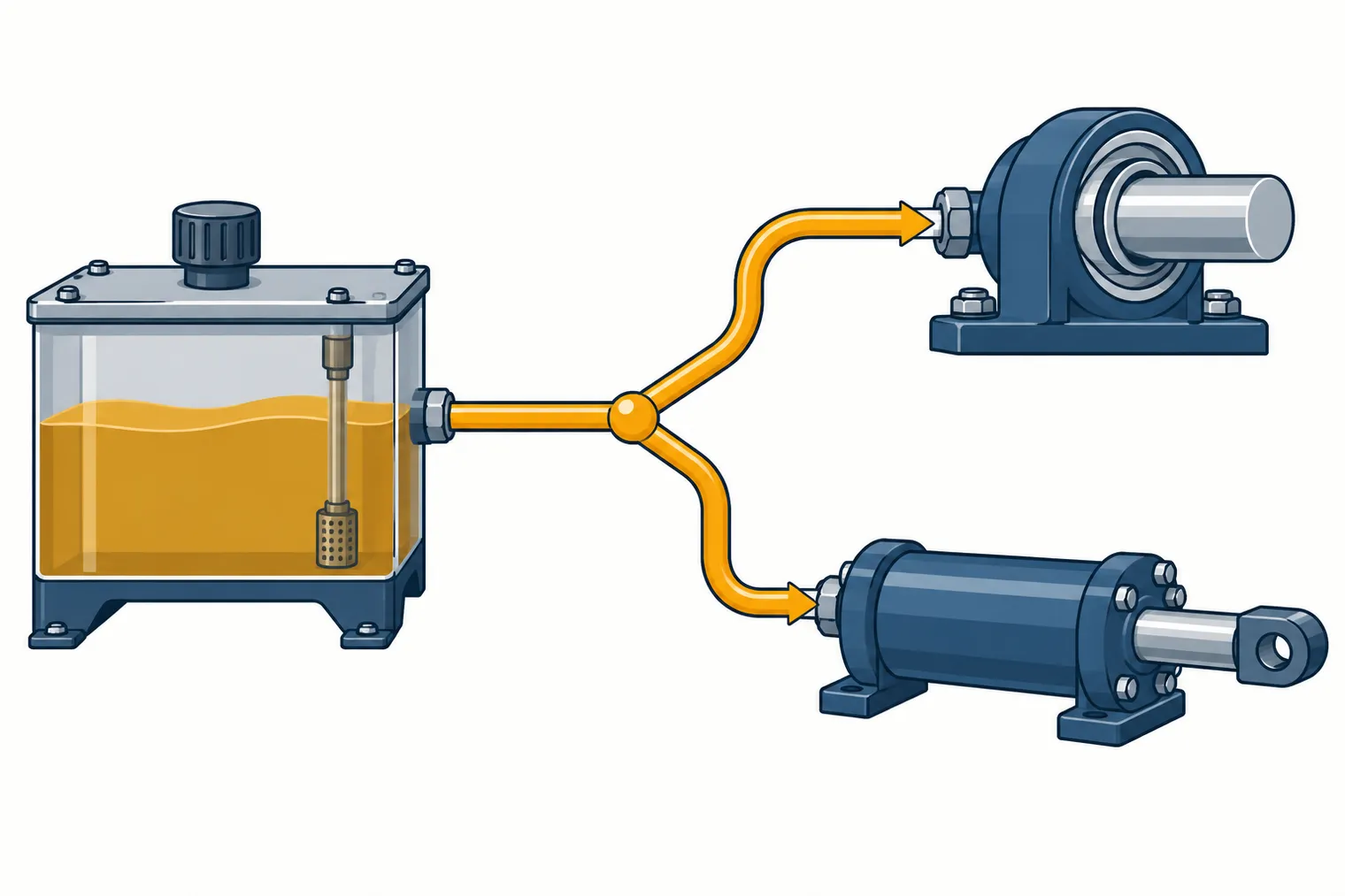
The illustration shows only the functional relationship. It cannot establish whether the actual machine has a common reservoir, which components are present, the direction of every return line or the correct filtration design. Use the approved machine diagram to determine the real boundary. Then compare an offered grade against the complete requirement for that boundary, rather than combining separate “suitable for” statements.
A replacement and a top-up need different evidence
An acceptable neat oil can still require a separate compatibility assessment before it contacts the incumbent. ExxonMobil's turbine-oil compatibility guidance distinguishes the condition of the in-service oil from the behaviour of new/used mixtures. Its test examples are guidance for evaluation, not universal limits for an unrelated grade or installation.
A useful evaluation brief identifies the actual incumbent sample, proposed new grade and residual fraction expected after the planned drain or top-up. Include the unmixed materials as controls. A problem already present in the used oil must not be attributed automatically to mixing; a new problem appearing only in a mixture warrants separate investigation. Ask the responsible equipment, lubricant and laboratory specialists to agree the relevant conditioning, performance tests and acceptance criteria before interpreting results.
Visual checks can reveal new haze, sediment or separation. A clear-looking blend, however, does not demonstrate retained foam control, air release, water separation or oxidation performance. Select the additional tests from the duty requirement; do not invent a universal jar-test pass or a fixed safe mixing percentage.
Specify the offered grade without promising a substitute
For the documented steam-turbine bearing/circulation requirement, start with the L-TSA R&O turbine-oil family. For an antiwear hydraulic duty, review the L-HM hydraulic-oil family. A gas-turbine requirement should be discussed against the separate L-TGA product, not silently assigned to the steam-turbine range.
Send the circuit identity, required fluid document, exact incumbent, proposed full change or top-up, operating conditions and any confirmed material constraints. Request the current offered-grade TDS/SDS and relevant performance or approval evidence. Add the quantity, packaging and destination for the commercial enquiry. Neither a catalogue typical-value table nor this guide grants equipment approval or certifies a residual mixture.
Technical references: ExxonMobil, Turbine Oil Compatibility; Mobil DTE 700 Series product documentation. Manufacturer examples remain specific to their named products; the circuit-first evaluation above is an engineering decision framework, not a MOS field-test result.