



NLGI 2 vs 3 Grease: Consistency and Industrial Selection
NLGI 3 grease is firmer than NLGI 2. The grade describes worked penetration consistency, not base-oil viscosity, quality, load capacity, or temperature rating. Maintenance and procurement teams should confirm grade-specific evidence before substitution.
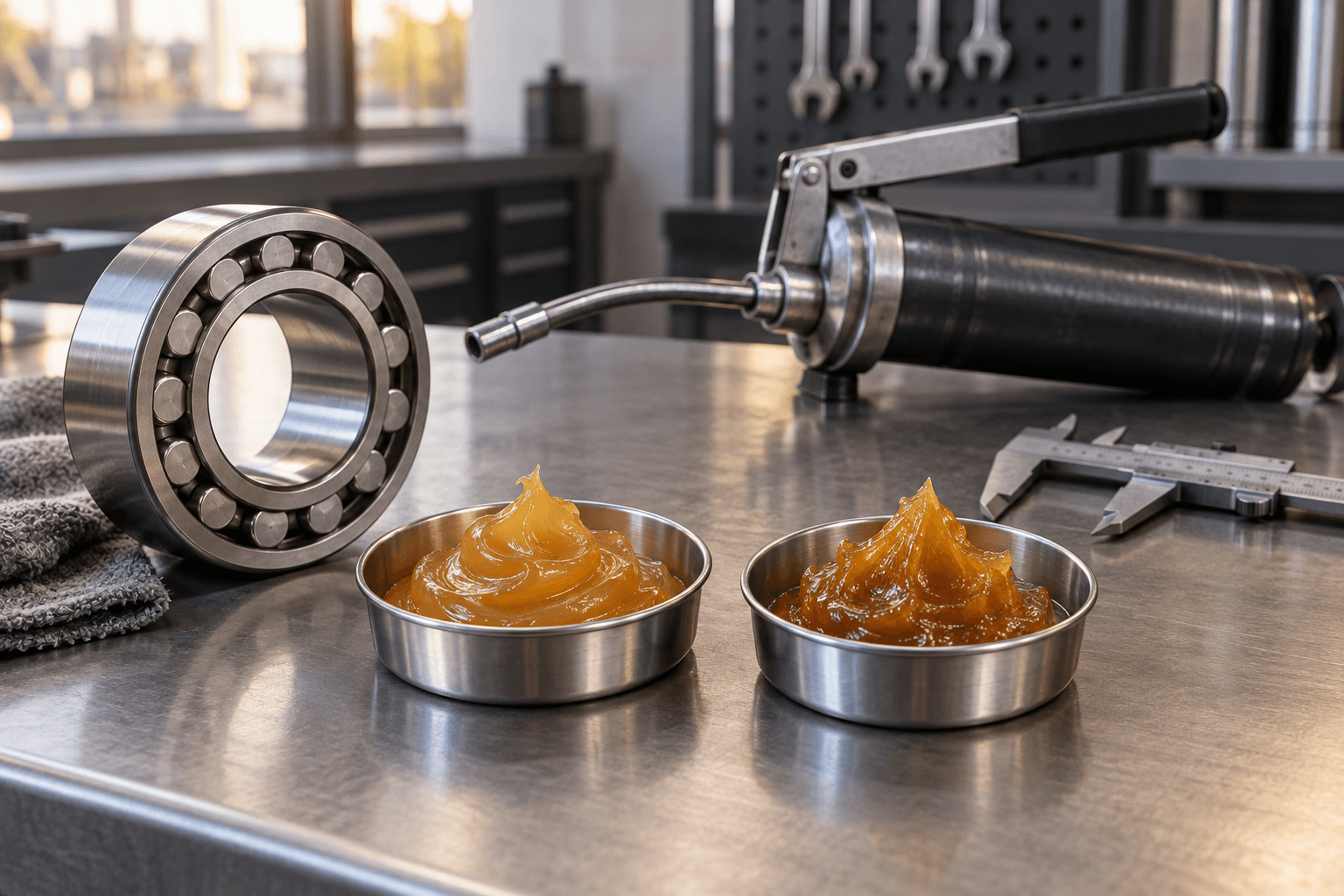
NLGI 3 is firmer than NLGI 2. The NLGI number describes grease consistency, not base-oil viscosity, quality, load rating, temperature limit or performance approval. Before choosing between NLGI 2 and NLGI 3, maintenance and procurement teams should confirm the grade required by the equipment OEM or current lubricant specification. A firmer grade does not automatically mean better high-speed, high-load or high-temperature performance.
Consistency first, not viscosity or performance
The NLGI consistency grade is based on worked penetration under defined test conditions. NLGI 3 is firmer than NLGI 2. This classification does not identify the base-oil viscosity, thickener chemistry, additive package or mechanical stability. Compare the complete lubricant specification for the bearing and lubrication system.
Buyer comparison: NLGI 2 vs 3
| Parameter | Buyer check |
|---|---|
| Consistency | NLGI 3 is firmer than NLGI 2. Confirm the required NLGI grade from the OEM or current lubricant specification. |
| Viscosity | NLGI grade is not base-oil viscosity. Request the base-oil viscosity and thickener type for each grade from the supplier. |
| Delivery / pumpability | Evaluate delivery at the lowest expected start-up temperature using the actual pump, line diameter and length, and metering devices. NLGI grade alone cannot establish required pressure or pumpability. |
| Mechanical stability | Both grades require grade-specific mechanical stability evidence. NLGI consistency alone does not predict how the grease holds up under shear and operating conditions. |
| Replacement checks | Before substituting NLGI 2 for 3 or 3 for 2, collect equipment type, lubrication method, current grease, bearing speed/load/temperature, pump/line details, and run a documented changeover/trial. |
Pumpability and delivery in practice
A grease that reaches a bearing under warm workshop conditions may behave differently during a cold start or through long supply lines. Confirm delivery to the furthest lubrication point within equipment limits; do not raise pump pressure beyond those limits to compensate for an unsuitable grease. Operating consistency and pumpability need separate evidence. If the equipment specification calls for a lithium-based NLGI 3 candidate, review the industrial lithium-based NLGI 3 grease page and request grade-specific data.
Mechanical stability and mixing compatibility
Matching NLGI grades or thickener names does not establish mixing compatibility. Avoid mixing different greases without a documented assessment: base oils, additives and thickener systems can differ. Obtain supplier/OEM advice and appropriate compatibility testing before an equipment trial. Agree the cleaning or purging method and monitor delivery, bearing temperature, leakage and grease condition against the existing baseline; define stop criteria before changing over.
What to collect before requesting a quote
A complete RFQ for NLGI 2 or 3 grease should include the following information so the supplier can confirm grade-specific suitability and documents.
- Equipment type and lubrication method (manual, centralized, single-point)
- OEM or current grease designation and required NLGI grade
- Bearing speed, load and operating temperature
- Pump and line details where relevant
- Sample quantity and annual demand
- Packaging format and destination
- TDS/SDS/COA requirements
Selecting NLGI 2 vs 3: decision checklist
Changing from grade 2 to 3, or 3 to 2, is a lubricant-specification change, not simply a choice of thickness. Confirm OEM requirements and obtain application approval before arranging a representative trial. For a catalogue family listing both grades, review the multipurpose lithium-calcium grease product information and identify the exact grade in your request. Ask for the current TDS to compare declared properties, the SDS for handling information, and the agreed batch COA items for incoming inspection. An SDS is not proof of application performance; a COA does not replace an equipment trial. Confirm which documents are available.
For a grade-specific quotation, send your equipment and grease requirements to MOS Lube. Include the current product and OEM specification, operating conditions, trial quantity, annual demand, packaging and destination. Ask us to confirm the proposed grade and document scope before arranging samples.
FAQ
Is NLGI 3 always better for high-temperature applications?
No. NLGI grade describes consistency, not temperature rating. High-temperature suitability depends on base oil, thickener and additives. Request grade-specific temperature data from the supplier and follow the OEM specification.
Can I mix NLGI 2 and NLGI 3 grease if both are lithium?
No. The same thickener name or NLGI grade does not prove compatibility. Obtain a documented compatibility assessment and supplier/OEM changeover advice before a monitored equipment trial.
Does NLGI 2 pump better than NLGI 3?
Grade 2 is softer under the classification test, but this alone does not establish pumpability in service. Compare the exact products at the relevant temperature and with the proposed pump, lines and metering devices.
What information should I send to get an NLGI 2 vs 3 recommendation?
Send equipment type, lubrication method, OEM or current grease designation, required NLGI grade, bearing speed/load/temperature, pump and line details if relevant, sample quantity and annual demand, packaging format, destination, and TDS/SDS/COA needs. Supplier documents and capabilities require confirmation.